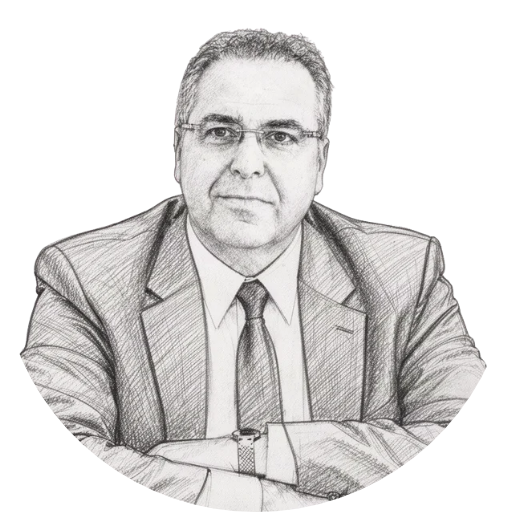
A Syrian philosopher, writer, and translator whose writing spans political philosophy, the critique of modernity, exile, and language.
He studied philosophy at the University of Damascus and pursued research in Paris, where he defended a doctorate on Habermas and Derrida in 2013. His later work extends from European debates on modernity to exile, identity, and the reception of philosophy in Arabic. [2] [3]
Formation: From Damascus to Paris
Al-Nabwani studied philosophy at the University of Damascus and graduated in 1999, according to a lengthy published interview. He moved to France in early 2004 and pursued graduate study in contemporary philosophy at Paris 1 Panthéon-Sorbonne. The French national theses database records that he defended a doctorate in philosophy at Paris 1 on 28 June 2013 under the supervision of the philosopher of law Jean-François Kervégan. Its title is ‘Habermas and Derrida: Theoretical Divergence and Practical Convergence?’ These university records establish the focus of his early research. [2] [3]
Residence in two cities cannot, by itself, explain an intellectual project, but it helps illuminate its conditions. The philosophy he encountered in Arabic in Damascus later became a subject of writing and research in French, before he revisited its questions in Arabic. His subsequent work on translation is connected to the shifts a concept undergoes when its language, audience, and political setting change. Later biographical accounts mention his teaching of political philosophy in Paris; his degree, books, and research publications can also be checked against institutional and publishing records. [1] [2] [3] [4]
The thesis poses a specific paradox: how could Habermas and Derrida, despite their differences over rationality, modernity, and philosophical language, draw closer on questions of politics, international law, and Europe's future? This question about the limits of theoretical disagreement and the possibility of common action remains discernible in later parts of al-Nabwani's work. [3] [5] [6]
For the full intellectual trajectory and its critical context, read the study and its accompanying source list.
Read the complete study · Sources
Home · The study · Works & sources · About · Articles

